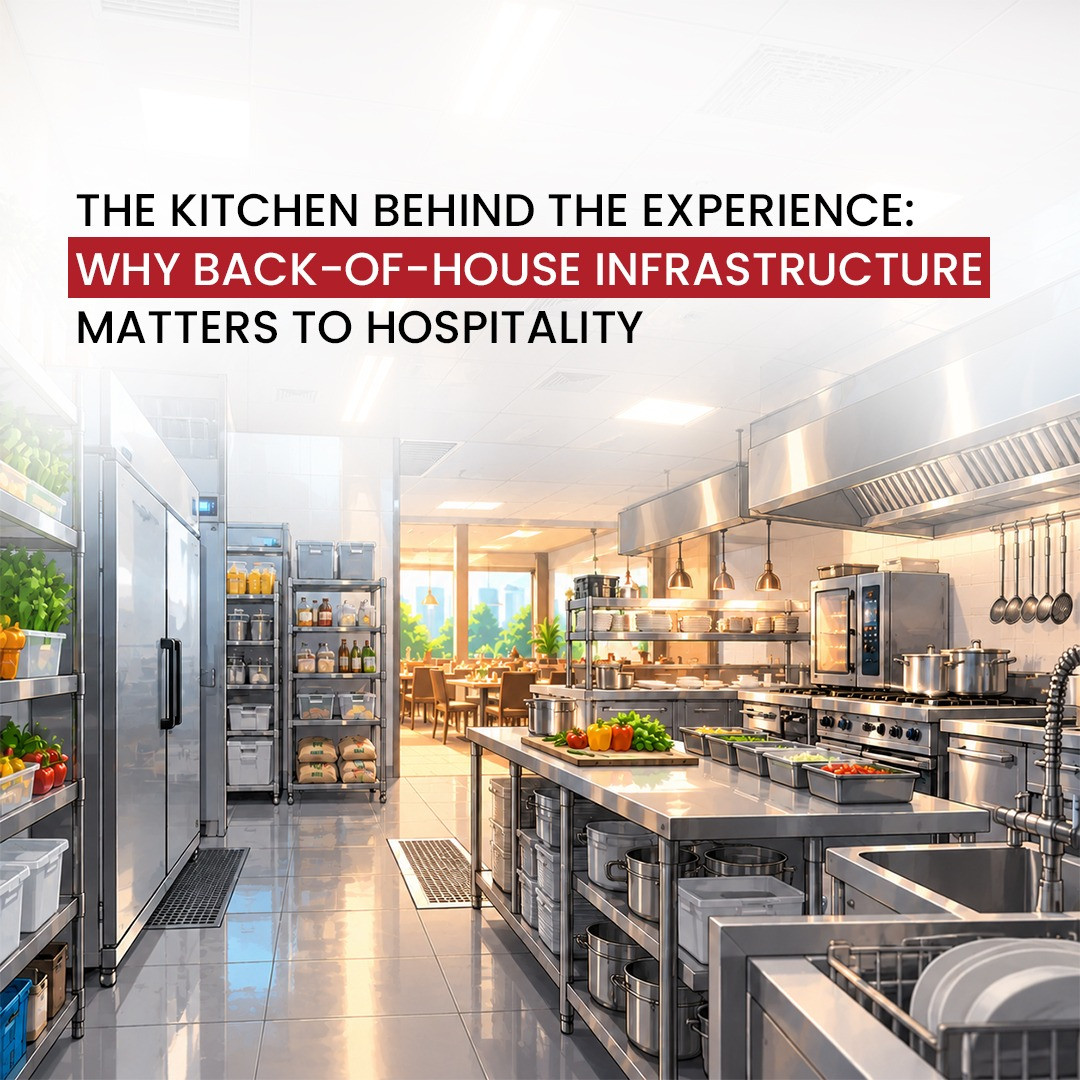
The Kitchen Behind the Experience: Why Back-of-House Infrastructure Matters to Hospitality
By paramount
A memorable dining experience involves much more than the food served at the table. While guests notice the ambience, presentation, service, and flavours, the work that makes these experiences possible happens behind the scenes. From ingredient preparation to cooking, storage, cleaning, and order coordination, every activity depends on an efficiently designed back-of-house infrastructure.
In the hospitality industry, the back of the house (BOH) includes kitchens, food preparation areas, storage rooms, dishwashing stations, staff facilities, and service corridors. Although guests rarely see these spaces, their condition and functionality directly influence service quality, operational efficiency, food safety, and overall customer satisfaction.
What Is Back-of-House Infrastructure in Hospitality?
Back-of-house infrastructure refers to the facilities, equipment, and operational systems that support a hotel or restaurant’s daily activities. Unlike front-of-house areas, which focus on guest interaction, BOH spaces are designed to help staff prepare, manage, and deliver services efficiently.
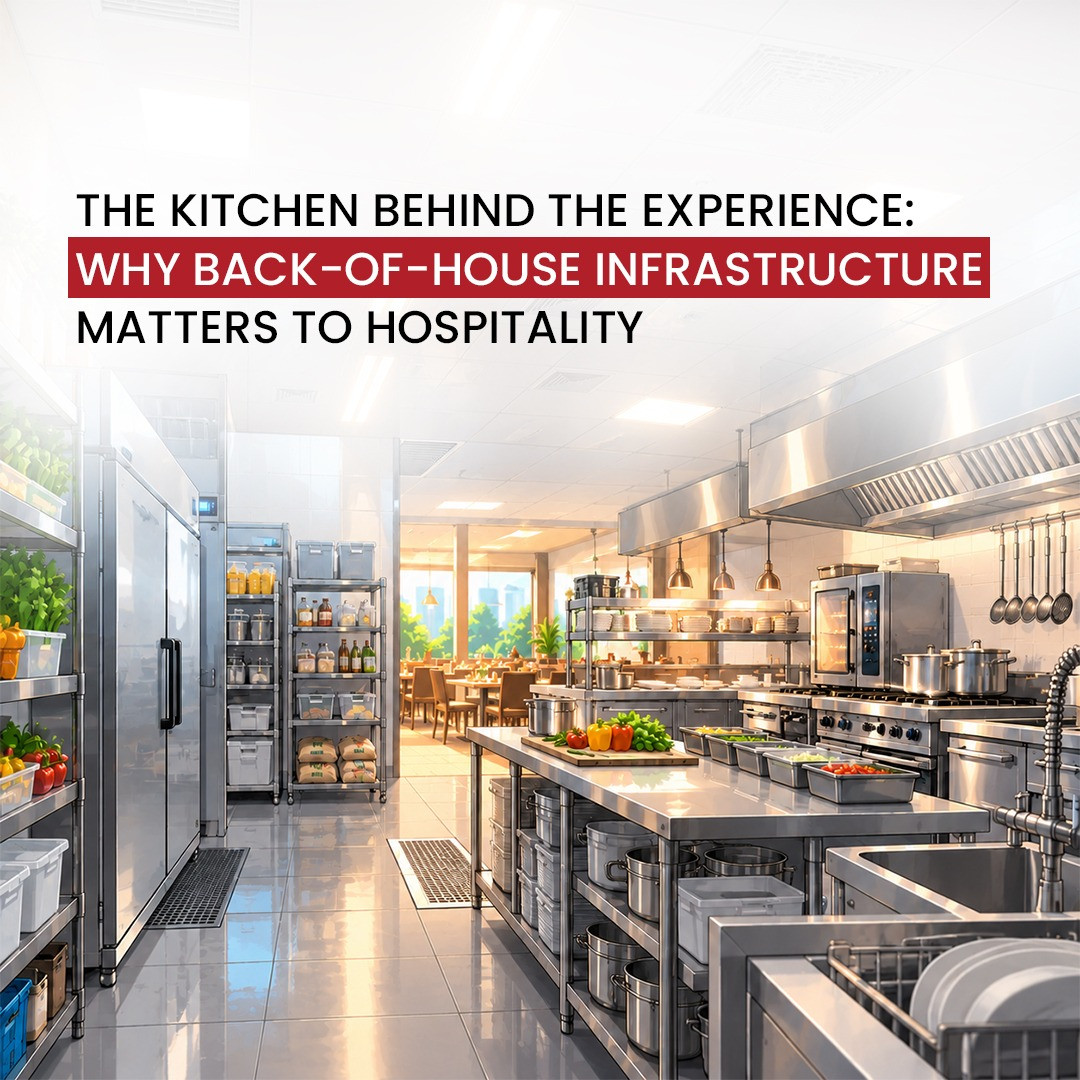
The commercial kitchen is one of the most important components of this infrastructure. It brings together cooking stations, refrigeration systems, preparation counters, ventilation, washing facilities, and storage areas. When these elements work together effectively, kitchen teams can manage orders, maintain consistency, and serve guests without unnecessary delays.
However, a poorly organised kitchen can create bottlenecks, increase staff workload, and affect the quality of service. This is why back-of-house planning should be considered a core part of hospitality management rather than a secondary facility requirement.
How Kitchen Design Influences Daily Operations
A commercial kitchen must support a continuous flow of ingredients, staff, equipment, and prepared dishes. The placement of each workstation influences how easily employees can move between tasks.
For example, receiving and storage areas should provide convenient access to preparation stations, while cooking areas should connect logically with plating and service points. Dishwashing facilities must also be positioned to manage used utensils without interfering with food preparation or clean equipment.
An effective layout reduces unnecessary movement, limits congestion during peak hours, and allows kitchen staff to coordinate more efficiently. Restaurants experiencing high order volumes benefit particularly from clearly defined work zones and equipment selected according to their menu and service requirements.
When evaluating commercial kitchen equipment suppliers in Dubai, hospitality businesses should consider more than the availability of individual appliances. Equipment dimensions, installation requirements, workflow compatibility, maintenance support, and the kitchen’s expected production volume are all important factors in creating a functional working environment.
The Role of Equipment in Food Safety and Quality
Food safety depends on consistent procedures and the right infrastructure. Refrigeration units help maintain appropriate storage temperatures, while dedicated preparation areas support hygienic food handling. Commercial dishwashers, suitable sinks, and easy-to-clean work surfaces also contribute to effective sanitation practices.
Equipment selection should account for the type of food being prepared, daily production volumes, and the specific requirements of the operation. For instance, a hotel serving breakfast, lunch, dinner, and banquet meals may require different refrigeration capacity and cooking equipment from a small café with a limited menu.
Ventilation is equally important. Properly designed extraction systems help remove heat, smoke, and cooking vapours, contributing to a safer and more comfortable working environment. Regular cleaning, equipment inspections, and preventive maintenance further reduce the risk of breakdowns and hygiene issues.
For businesses evaluating kitchen equipment suppliers in Abu Dhabi, it is important to assess whether the proposed equipment meets operational needs, applicable safety requirements, and the demands of continuous commercial use.
Energy Efficiency and Long-Term Operating Costs
Kitchen infrastructure also affects a hospitality business’s ongoing expenses. Refrigeration, cooking appliances, dishwashers, and ventilation systems can consume substantial amounts of energy and water throughout the day.
Choosing appropriately sized equipment, maintaining refrigeration systems, cleaning filters, and monitoring energy consumption can help reduce avoidable resource use. Energy-efficient appliances may also lower operating expenses over time, depending on their purchase price, usage patterns, and maintenance requirements.
Equipment should therefore be evaluated based on its total cost of ownership, not simply its initial purchase price. Installation, utility consumption, spare parts, servicing, and expected service life all influence the long-term value of an investment.
The same approach applies to Kitchen equipment suppliers in Sharjah, where restaurants and hospitality operators need solutions suited to their menu, kitchen capacity, local operating conditions, and service demands. Access to suitable equipment and reliable after-sales support can make a meaningful difference to operational continuity.
Supporting Staff Productivity and Workplace Well-Being
Kitchen teams often work under considerable pressure, particularly during busy service periods. Limited workspace, excessive heat, poorly positioned equipment, and inadequate storage can make routine tasks more difficult than necessary.
Well-planned back-of-house spaces help employees work safely and comfortably. Adequate lighting, effective ventilation, ergonomic workstations, accessible storage, and clear movement routes can reduce physical strain and improve coordination.
Staff facilities also deserve attention. Clean changing areas, organised storage for personal belongings, and appropriate break spaces contribute to a better working environment. Investing in these areas demonstrates that employee well-being is an essential part of operational performance.
Hospitality businesses should also recognise that experienced kitchen personnel are valuable to the organisation. Providing them with suitable tools, functional workspaces, and properly maintained equipment helps create conditions in which skilled teams can perform consistently.
Why Back-of-House Investment Matters for Business Growth
As hospitality businesses expand their menus, introduce delivery services, or increase seating capacity, their kitchen infrastructure must accommodate changing demands. Equipment that suits a small restaurant may not support a larger operation or a high-volume hotel kitchen.
Planning ahead allows businesses to assess available space, utility connections, storage capacity, workflow, and future production requirements before making major investments. Regular infrastructure reviews can also identify outdated equipment, inefficient layouts, and maintenance issues before they disrupt service.
Ultimately, the back of the house is not simply a collection of rooms hidden from guests. It is the operational foundation that enables hospitality businesses to deliver the experiences customers expect. By prioritising kitchen design, suitable equipment, food safety, energy efficiency, and staff well-being, hotels and restaurants can build more organised, productive, and resilient operations. Guests may never see the kitchen behind their meal, but they experience the results every time they receive an order that is prepared safely, served on time, and consistent in quality.