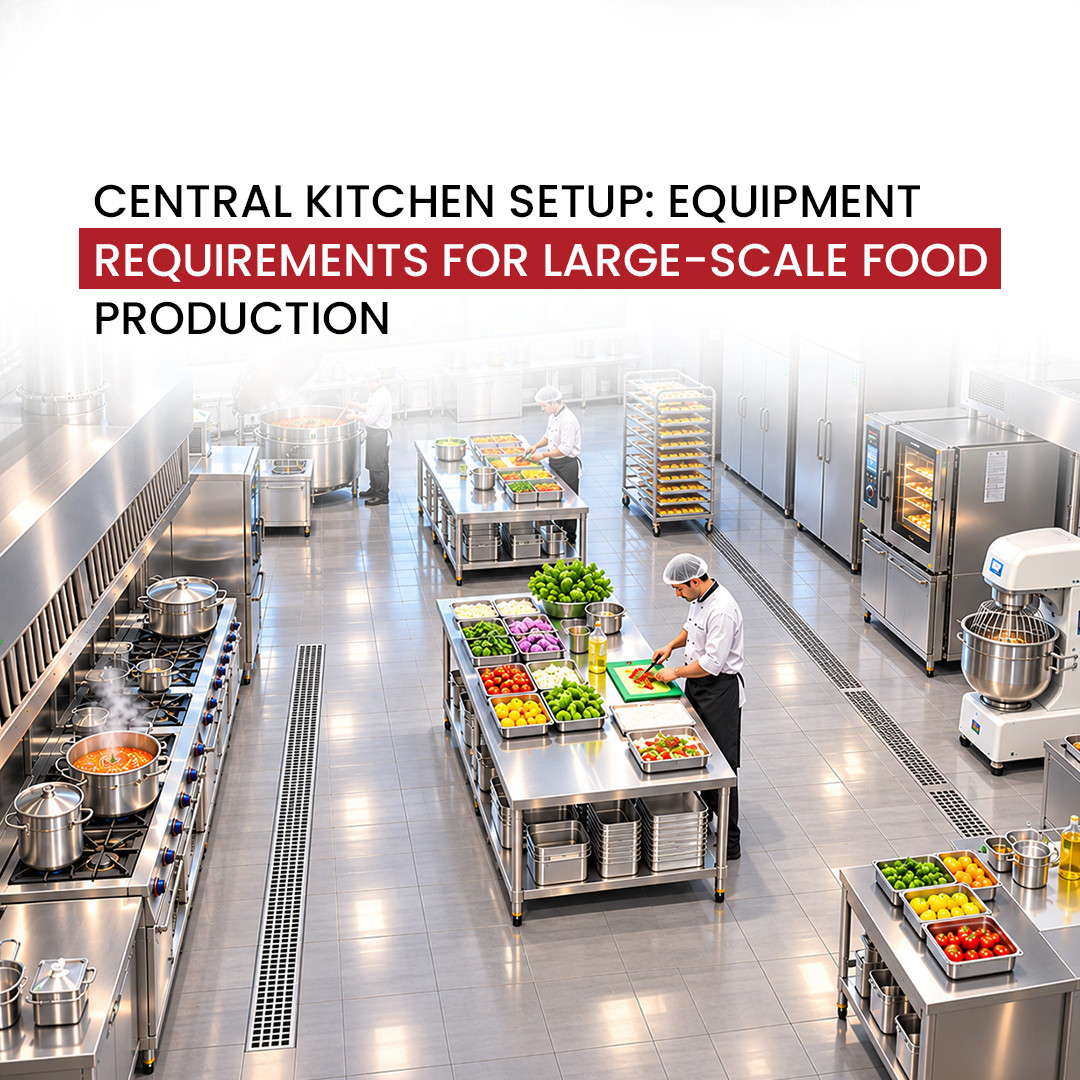
Central Kitchen Setup: Equipment Requirements for Large-Scale Food Production
By paramount
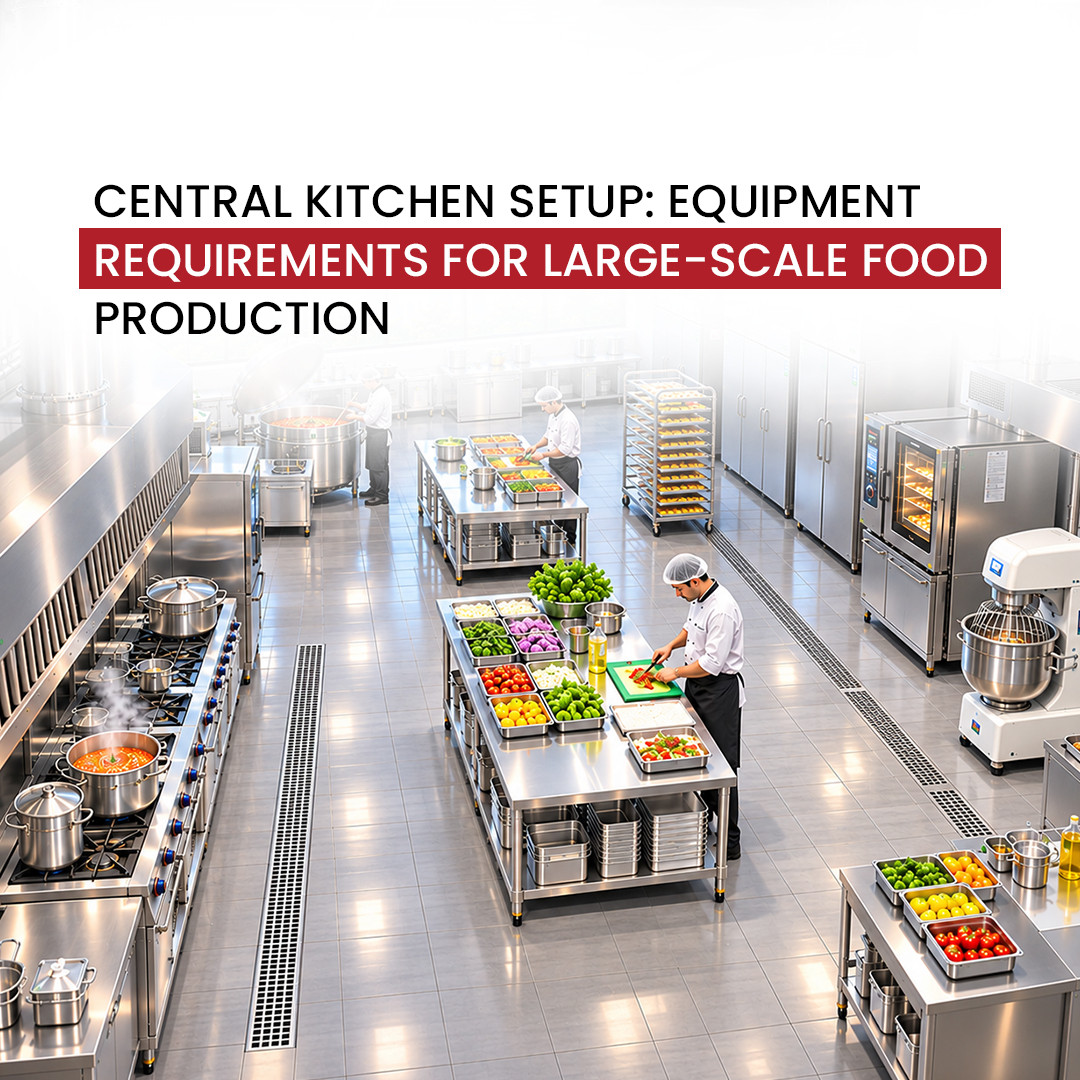
Central kitchens are designed to prepare large quantities of food for restaurant chains, hotels, catering companies, cloud kitchens, and institutional foodservice facilities. Unlike conventional restaurant kitchens, they support multiple outlets and require equipment that can handle high production volumes while maintaining consistent quality and hygiene.
Setting up a central kitchen requires careful planning around production capacity, menu requirements, storage, and workflow. Choosing equipment based only on price or size can lead to production delays, inefficient space utilization, and higher operating expenses. This guide covers the essential equipment categories and key factors to consider when planning a central kitchen setup.
Understanding Central Kitchen Requirements
A central kitchen is a dedicated production facility where ingredients are prepared, food is cooked, and products are stored or packed before distribution. Its requirements depend on the type of food produced, daily output, batch sizes, and the number of outlets served.
For example, a restaurant chain may centralize the preparation of sauces, marinades, and chopped vegetables, while a catering company may require equipment for preparing hundreds of meals within a limited period.
Before purchasing equipment, businesses should identify their production targets, operating hours, menu requirements, and available space. These details help determine the appropriate equipment capacities and avoid unnecessary purchases.
Essential Equipment for Central Kitchen Operations
1. Food Preparation Equipment
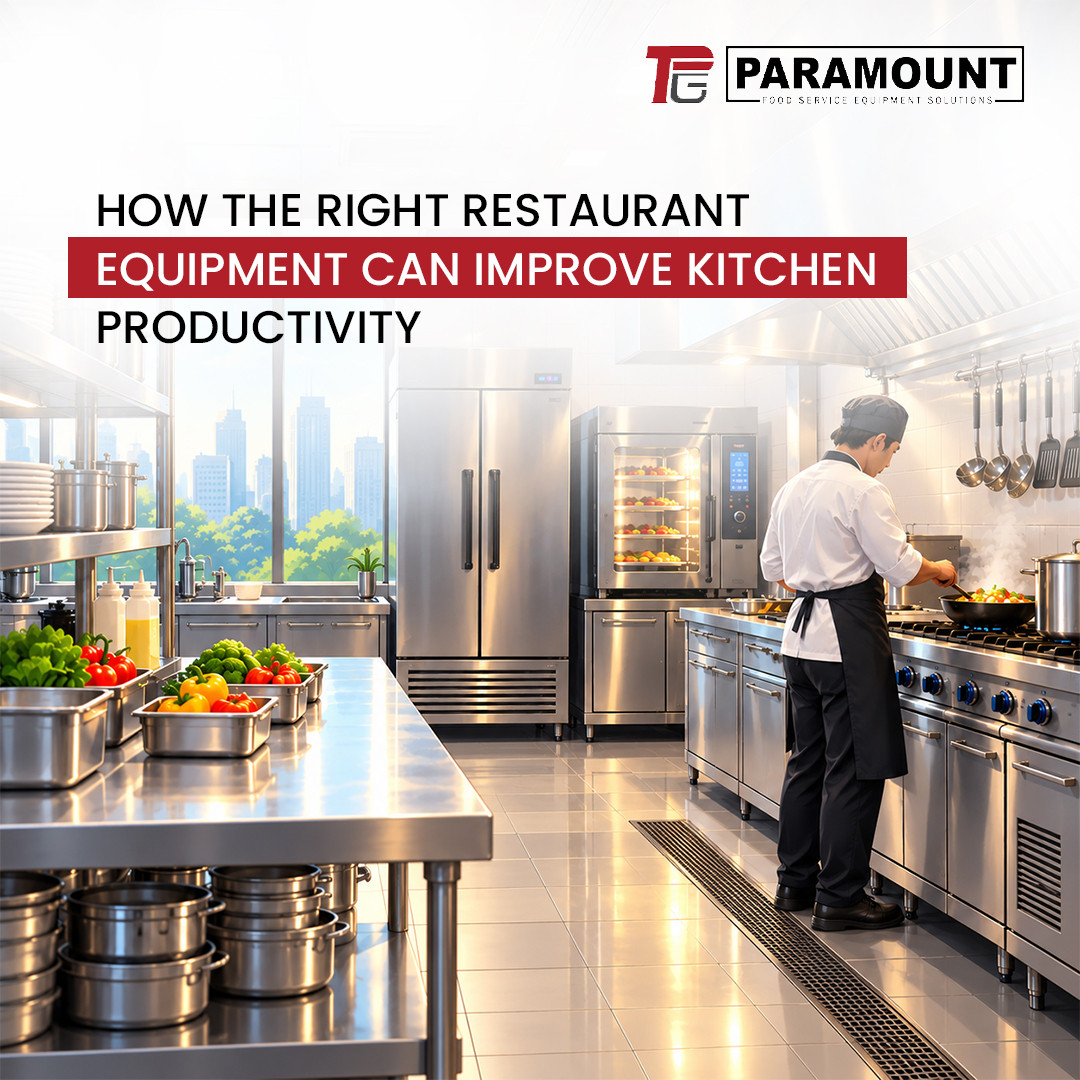
Bulk food preparation requires machines that can handle repetitive tasks efficiently. Common equipment includes vegetable cutters, food processors, commercial mixers, meat preparation machines, weighing scales, and stainless-steel preparation tables.
Vegetable cutters and food processors reduce manual chopping time, while commercial mixers support the preparation of dough, batters, fillings, and sauces. Weighing and portioning tools help maintain consistency across batches.
Businesses comparing kitchen equipment suppliers UAE should evaluate machine capacity, cleaning requirements, ease of operation, and suitability for repeated daily use. Preparation areas should also support proper separation between raw ingredients and ready-to-eat foods.
2. High-Capacity Cooking Equipment
The cooking section should accommodate the kitchen’s menu and production schedule. Depending on the application, essential equipment may include commercial ovens, cooking ranges, high-capacity fryers, tilting kettles, grills, and steam cooking units.
Tilting kettles are useful for preparing bulk quantities of soups, gravies, and sauces. Commercial ovens support baking and roasting, while high-capacity fryers are suitable for operations producing large quantities of fried foods.
When selecting cooking equipment, businesses should consider batch capacity, cooking time, temperature control, energy requirements, and the number of production cycles possible per shift. Ventilation and utility connections must also be checked before installation.
3. Refrigeration and Freezer Systems
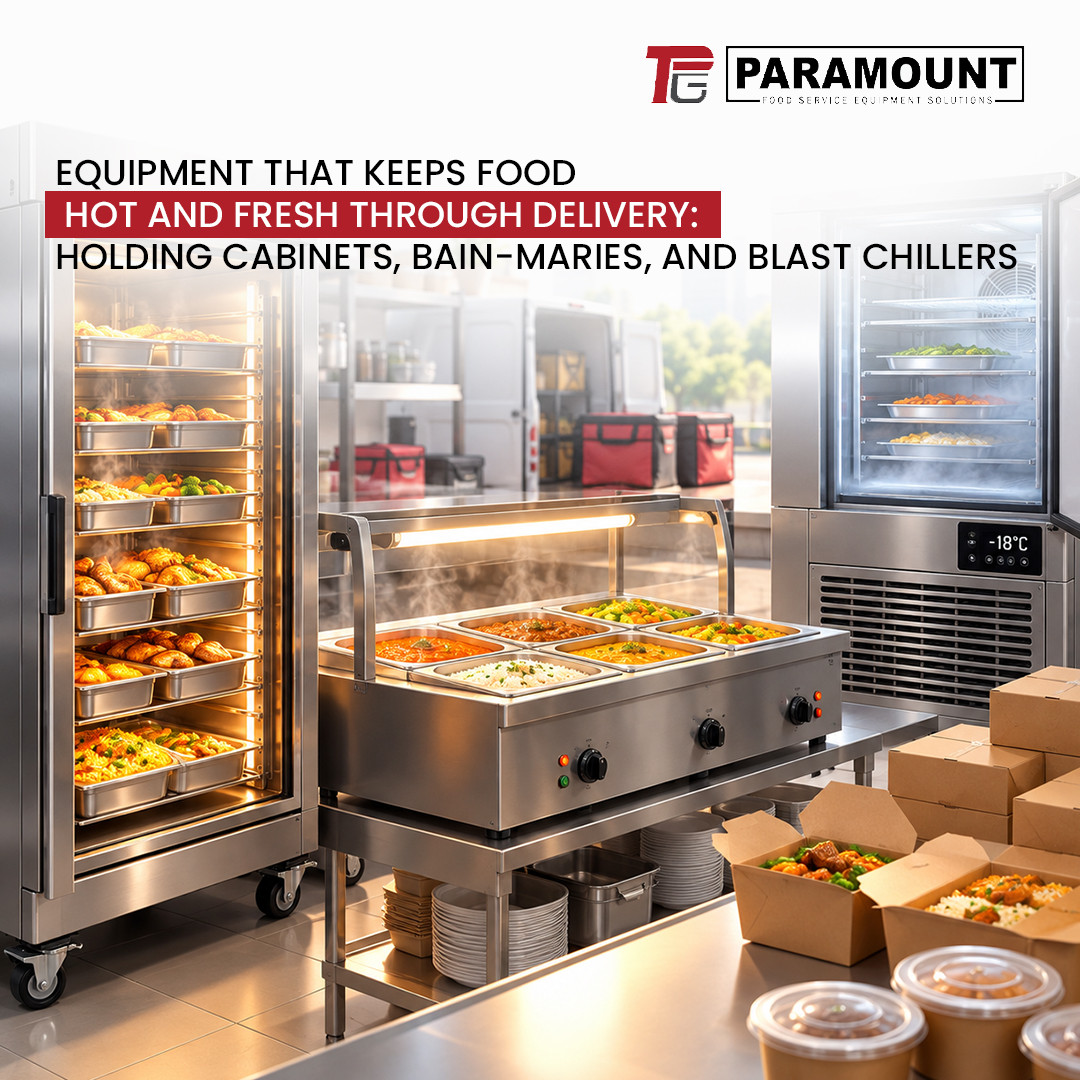
Refrigeration is essential for maintaining the quality and safety of perishable ingredients and prepared food. Depending on production needs, a central kitchen may require commercial refrigerators, upright freezers, cold rooms, undercounter refrigeration units, and blast chillers.
Capacity should reflect inventory levels, delivery frequency, and the time between preparation and distribution. Businesses must also provide suitable storage conditions for chilled and frozen products.
Blast chillers can support operations that cook food in batches and need to cool it quickly under appropriate food safety procedures. Temperature monitoring, stock rotation, and separation of raw and cooked products are equally important.
4. Storage Equipment
Organized storage helps staff access ingredients and supplies without disrupting production. Common solutions include stainless-steel shelving, storage racks, ingredient bins, food-grade containers, tray racks, and mobile storage systems.
Frequently used ingredients should remain accessible to preparation teams, while bulk stock should be stored in designated areas. Packaging materials should be positioned near packing stations, and cleaning supplies must be kept separate from food and food-contact materials.
5. Transport Equipment
Central kitchens frequently move ingredients, utensils, trays, and prepared food between workstations. Utility trolleys, tray trolleys, ingredient carts, mobile racks, and food transport containers can simplify these movements.
Equipment should suit the weight and dimensions of the items being transported. Businesses should also check aisle widths, doorways, and turning space to ensure safe movement. Suitable insulated containers may be necessary when food must maintain specific temperatures during internal transport.
6. Commercial Dishwashing and Cleaning Equipment
High-volume food production generates substantial quantities of used utensils, trays, mixing bowls, and containers. Commercial dishwashers, pre-rinse stations, stainless-steel sinks, sorting tables, and drying racks help manage these cleaning requirements.
Equipment capacity should match peak washing volumes. Water supply, drainage, available space, and utility requirements should be assessed before installation.
The cleaning area should provide separate spaces for collecting dirty items, washing, drying, and storing clean equipment. Proper separation from food preparation areas helps reduce cross-contamination risks.
Kitchen Layout and Equipment Placement
Even suitable equipment can create operational problems when poorly positioned. A well-designed layout should account for ingredient receiving, storage, preparation, cooking, cooling, packing, and dispatch.
Arranging these areas according to the production sequence reduces unnecessary movement and congestion. Businesses should also consider ventilation, drainage, electrical connections, gas supply, water access, and maintenance clearance before finalizing equipment positions.
Verifying machine dimensions and installation requirements in advance helps ensure that equipment fits the available space without compromising safety, hygiene, or workflow.
Common Equipment Planning Mistakes
Several mistakes can affect the efficiency of a central kitchen:
- Choosing equipment based only on price: Consider energy consumption, maintenance, cleaning, and long-term operating requirements.
- Underestimating storage capacity: Ensure refrigeration and dry storage can accommodate inventory and prepared products.
- Ignoring production bottlenecks: Preparation, cooking, cooling, and packing capacities should support one another.
- Overlooking utility requirements: Confirm electrical capacity, ventilation, drainage, water supply, and gas connections before ordering.
- Neglecting maintenance access: Equipment must remain accessible for cleaning, inspection, and servicing.
- Purchasing without production targets: Select machines according to actual batch sizes, daily output, and operating hours.
Addressing these factors early helps businesses avoid unnecessary expenditure and operational delays.
Selecting the Right Commercial Kitchen Equipment Supplier
Choosing equipment involves more than comparing individual product specifications. Businesses need a suitable product range, appropriate capacities, and equipment that works together as part of an efficient production system.
When evaluating commercial kitchen equipment suppliers in Dubai, businesses should assess product availability, technical specifications, and suitability for large-scale food production. Understanding installation requirements and the intended application is equally important.
Paramount offers commercial kitchen equipment for professional foodservice operations, including solutions for food preparation, cooking, refrigeration, freezing, storage, and warewashing. Its range supports businesses looking to source equipment for different stages of central kitchen production.
Key Takeaway
A successful central kitchen setup begins with clear production targets, suitable equipment capacities, adequate storage, and an efficient layout. Selecting machines as part of an integrated system helps reduce bottlenecks, optimize space utilization, and support consistent food production.
When sourcing equipment for a professional food production facility, choosing a reliable kitchen equipment supplier UAE, Oman, Qatar, Bahrain or India is essential. With extensive range of commercial kitchen equipment, Paramount can help you find the right equipment to suit your central kitchen requirements.