How to Choose a Bakery Oven for Your Production Volume
By paramount
The moment the doors of a bakery oven open, the aroma of freshly baked bread, golden pastries, and delicious cakes fills the air. For many people, this warm and inviting scent is the first thing that comes to mind when they think about a bakery. While the oven is often associated with the magic of baking and the irresistible smell of fresh products, its role goes far beyond that.
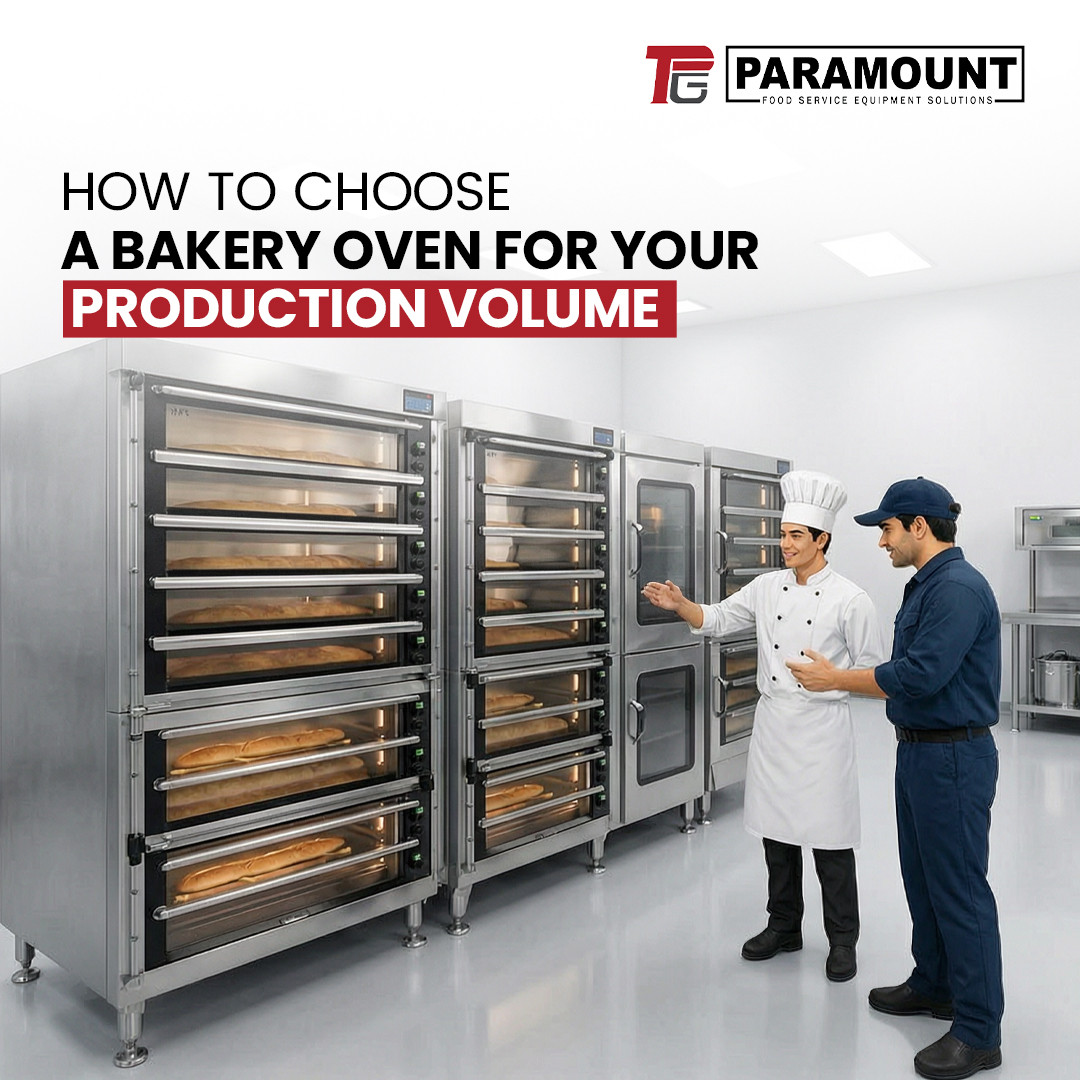
The success of a bakery depends on many factors, but one of the most important is having the right oven at the heart of the operation. The quality of baked goods, production efficiency, consistency, and overall profitability are all directly influenced by the oven you choose. Whether you run a small artisan bakery or a large-scale production facility, selecting an oven that matches your production volume is a crucial part for success.
However, choosing a bakery oven is not simply about selecting the biggest or most advanced model available. It requires a clear understanding of your daily production needs, the types of products you bake, available space, and future business goals. By carefully evaluating these factors, you can invest in equipment that supports both quality and growth.
Let’s take a closer look!
Understand Your Production Volume
The first step in choosing a bakery oven is evaluating your production volume. Consider how many products you bake each day and the types of items you produce. A bakery that focuses on cakes and pastries will have different requirements from one that specializes in bread or large-scale commercial baking.
Small bakeries with limited daily production may only need a compact oven, while larger operations require equipment capable of handling continuous baking throughout the day. Investing in an oven that matches your current workload while allowing room for future expansion can save both time and money in the long run. Consulting experienced Kitchen equipment suppliers Sharjah can also help bakery owners identify oven capacities and features that best suit their production requirements and future growth plans.
Explore Different Types of Bakery Ovens
Convection Ovens
Convection ovens use fans to circulate hot air evenly throughout the baking chamber. They are ideal for bakeries producing cookies, pastries, cakes, and muffins. Their fast and consistent baking performance makes them a popular choice for small and medium-sized businesses.
Deck Ovens
Deck ovens feature independent baking chambers that allow precise temperature control. They are commonly used for artisan breads, specialty pastries, and products that require a traditional baking method. These ovens provide excellent baking quality but generally require more space and operator experience.
Rotary Rack Ovens
Rotary rack ovens are designed for high-volume production. Multiple trays are loaded onto a rotating rack, ensuring uniform heat distribution and consistent baking results. These ovens are suitable for commercial bakeries that need to produce large quantities every day.
Combi Ovens
Modern combi ovens combine convection technology with precise humidity and temperature control. They offer exceptional flexibility, allowing bakers to prepare different products while maintaining consistent quality. For many bakeries, combi ovens provide the perfect balance of efficiency, versatility, and space optimization.
Consider Energy Efficiency
Energy consumption is a major operating cost for bakeries. Modern bakery ovens are designed to deliver better performance while reducing energy usage. Features such as advanced insulation, programmable controls, and efficient airflow systems help lower utility bills without compromising baking quality.
Electric ovens have become increasingly popular due to their precise temperature control and compatibility with sustainable energy solutions. Choosing an energy-efficient model can significantly reduce long-term operating expenses.
Think About Space and Workflow
The size of your bakery should influence your equipment selection. A large oven may seem attractive, but if it is rarely used at full capacity, it can lead to unnecessary energy consumption and wasted space.
Instead, choose an oven that fits naturally into your workflow. Many bakeries now prefer modular solutions that allow them to handle different baking schedules efficiently while maximizing available floor space.
Now, imagine a neighborhood bakery that produces 50–100 trays of cakes, cookies, and pastries each day. A convection oven may be sufficient to handle this workload efficiently. On the other hand, a commercial bakery supplying bread and baked goods to supermarkets may need to produce thousands of items daily. In such cases, a rotary rack oven or a combi oven offers the capacity and consistency required to meet high production demands. Selecting an oven that matches actual output helps improve efficiency, reduce energy waste, and maintain product quality.
Work with Reliable Equipment Suppliers
Choosing a trusted supplier is just as important as selecting the right oven. Experienced Kitchen equipment suppliers Abu Dhabi can help bakery owners identify equipment that aligns with their production goals and operational needs.
Final Thoughts
The aroma of freshly baked products may be what draws customers into a bakery, but it is the efficiency and reliability of the oven behind the scenes that keep the business running smoothly. Choosing the right oven ensures that every batch is baked consistently, production schedules stay on track, and resources are used effectively.
By matching your oven to your production volume and operational needs, you create a stronger foundation for long-term success. Whether you’re producing a few trays of pastries each day or managing large-scale bakery operations, the right oven can help improve workflow, reduce unnecessary costs, and maintain the quality standards that set your bakery apart. Partnering with trusted providers of Commercial kitchen equipment Oman can further help businesses find baking solutions that support both current production needs and future growth.